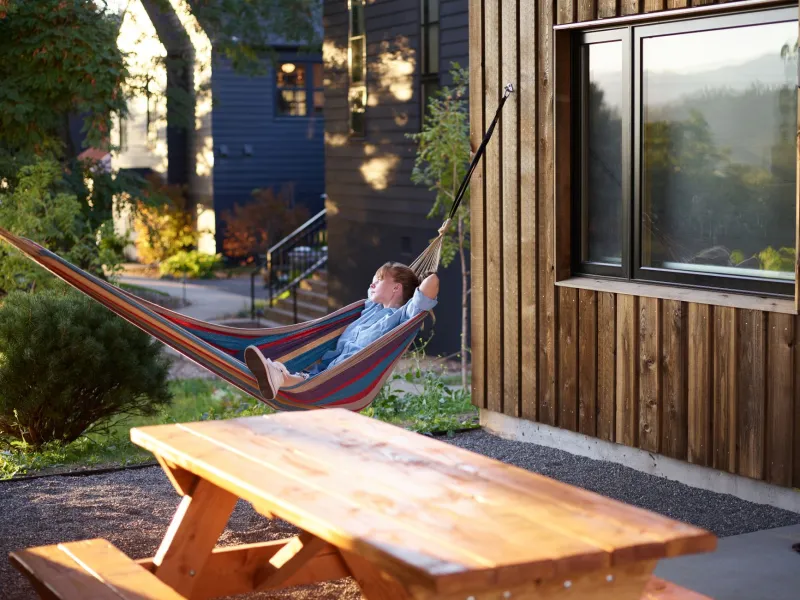
Gloriously Unproductive: How a Lazy Afternoon Became America's Most Daring Hobby

Let's get one thing straight: you are not "wasting" an afternoon by spending it horizontal on a porch swing with a paperback and a glass of sweet tea. You are, in fact, staging a one-person revolution. A quiet one, sure — no megaphones, no matching T-shirts — but a revolution nonetheless.
Somewhere along the way, the simple pleasure of an unstructured afternoon became the lifestyle equivalent of jaywalking. You do it, you feel a little thrill, and then you glance over your shoulder to make sure nobody's watching.
The Hustle Gospel and How It Stole Your Sundays
America has a complicated relationship with rest. We talk about work-life balance the way we talk about eating more vegetables — enthusiastically, in theory, and rarely in practice. The cultural messaging is relentless: optimize your mornings, hack your habits, turn your passion into a side hustle, and for the love of productivity, never, ever just sit there.
Social media didn't invent hustle culture, but it certainly gave it a megaphone and a ring light. Scroll through any feed on a Saturday afternoon and you'll find someone running their seventh mile, meal-prepping seventeen identical containers of quinoa, or attending a "networking brunch" — which is just a regular brunch where everyone feels vaguely anxious.
The result? A generation of adults who feel genuine guilt about sitting still. Who check email during movies. Who describe a beach vacation as "recharging" because framing leisure as a productivity strategy is the only way to justify it.
We have, collectively, forgotten how to just... be.
What a Real Afternoon Actually Looks Like
Here's a radical proposition: block off a Saturday afternoon — say, one to five — and make absolutely no plans. Not "no big plans." No plans. Nothing scheduled, nothing optimized, nothing that could reasonably appear in a bullet journal.
Maybe you end up reading three chapters of a novel you've been meaning to finish since 2021. Maybe you take a nap so deep that you wake up briefly unsure what decade it is. Maybe you sit on your back porch and watch a squirrel make increasingly questionable decisions in your yard. Maybe you do all three, in that order, and feel like an absolute monarch.
This is the life of Riley, people. This is the whole point.
The afternoon — that golden, unhurried stretch between lunch and dinner — used to be culturally protected time. Porch-sitting was a legitimate activity. Drives with no destination were considered pleasant rather than inefficient. Napping wasn't a "power" anything; it was just a nap, and it was wonderful.
Why Doing Nothing Feels So Transgressive Now
Psychologists have a term for the discomfort most Americans feel when they're not being productive: it's sometimes called "idleness aversion," and studies suggest we're so conditioned to busyness that we'll invent pointless tasks just to avoid the sensation of stillness. In one famous experiment, participants chose to give themselves mild electric shocks rather than sit quietly with their thoughts for fifteen minutes.
Electric shocks. Over sitting quietly.
If that doesn't convince you that we've lost the plot entirely, consider this: "I've been so busy" has become the default American greeting, a status symbol disguised as a complaint. Busyness signals importance. Stillness, by contrast, signals that you might not be trying hard enough — a social crime on par with showing up to a potluck empty-handed.
But here's the thing about purposeless time: it's where the good stuff lives. The daydreams that turn into ideas. The conversations that meander into unexpected places. The simple, cellular joy of watching afternoon light move slowly across a hardwood floor. None of that happens when you're optimizing.
The Porch as a Portal
There's something specifically powerful about the American porch as a setting for doing nothing. Architecturally, it's a transitional space — not quite indoors, not quite out — and psychologically, it functions the same way. You're present but unhurried. Available but unscheduled. Connected to the neighborhood without being obligated to it.
Front porches peaked in American culture before air conditioning pushed everyone inside, and their decline maps neatly onto our increasing disconnection from slow, unstructured time. The porch invited you to exist without agenda. To wave at a neighbor. To watch a storm roll in. To let an afternoon simply happen to you.
If you have a porch, use it. If you don't, a stoop works. A fire escape works. A lawn chair positioned with intent in your backyard works beautifully. The geography matters less than the commitment to actually showing up and doing nothing in it.
Permission Granted (Not That You Needed It)
The beautiful irony of reclaiming the lazy afternoon is that it requires a certain amount of discipline — not to fill it. You will feel the pull of your phone. You will remember three emails you meant to send. Your brain, trained by years of productivity culture, will try to convince you that you're squandering something precious.
You're not. You're doing the opposite.
Rest isn't the absence of productivity. It's the foundation of it, and more importantly, it's its own reward — one that doesn't require justification. You don't need to emerge from a Sunday afternoon nap with a business plan. You don't need to turn your porch-sitting into a mindfulness practice you can describe at dinner parties. You're allowed to simply have enjoyed it, full stop.
So this weekend, close the laptop. Ignore the group chat. Let the quinoa stay unmeal-prepped. Find yourself a comfortable spot, a beverage of your choosing, and absolutely nothing you have to accomplish.
Then do it with the quiet confidence of someone who has figured something out that most people are still missing.
Because you have. And it feels terrific.